The lure of infrared
smoke & mirrors
Infrared photography is a curious beast. It can yield spectacular results, both in blacks & white and colour. It relishes the bright, contrasty conditions which are anathema to many other styles of photography, allowing those of us in sunnier climes to carry on clicking away during the long hot summer. And yet, how many famous infrared photographers are there ? I can actually only think of one well known photographer who’s core body of wok relies on infrared, and that’s the late Simon Marsden. Marsden’s work is so unique and recognisable that he successfully sued U2 for plagiarising him with the photo on their album The Unforgettable Fire. But most of time, infrared photography is basically just a shallow trick, a way of making unremarkable compositions look good purely due to the unearthly representation of light and shadow.

Simon Marsden needed the IR look to convey his vision of gothic decay and uneasy spirits. Some landscape photographers make good use of infrared from time to time, but sparingly. Personally I think that whenever the medium - infrared - is prominent in the description of a body of work, that work is going to fall flat. Either the work needs the look - in which case there’s little point in making great announcements about it - or the work needs to be salvaged by an unusual medium (quite often Kodak Aerochrome these days). Personally I feel Richard Mosse fits into that category, but I’m in a minority there.

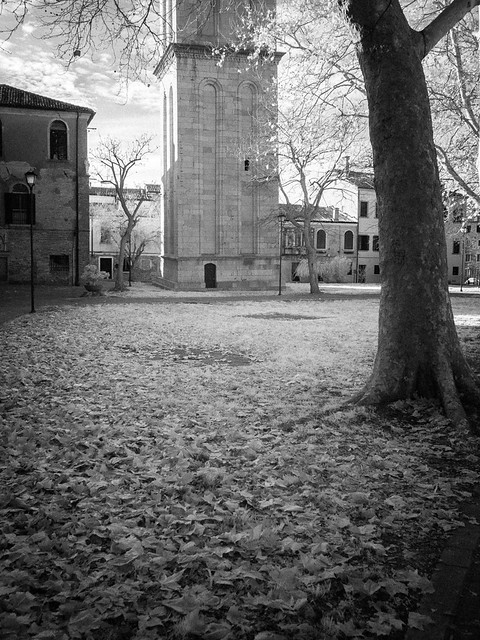
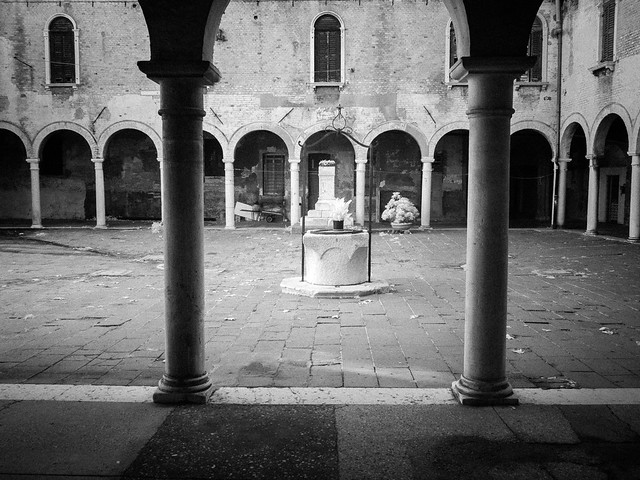
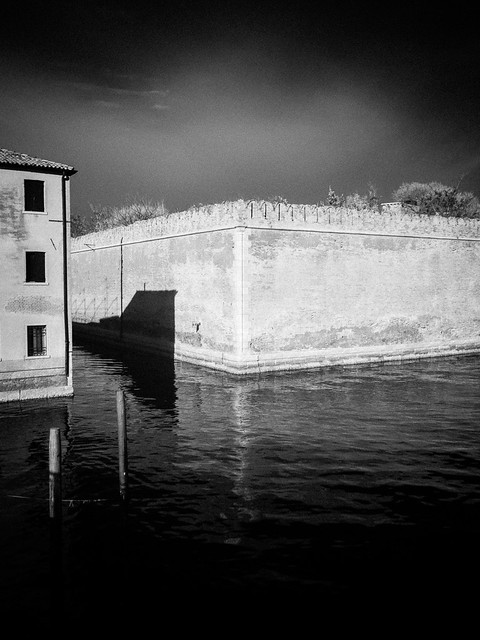
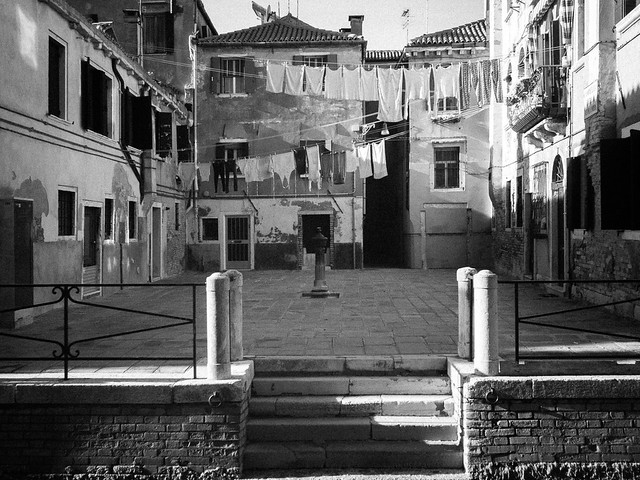
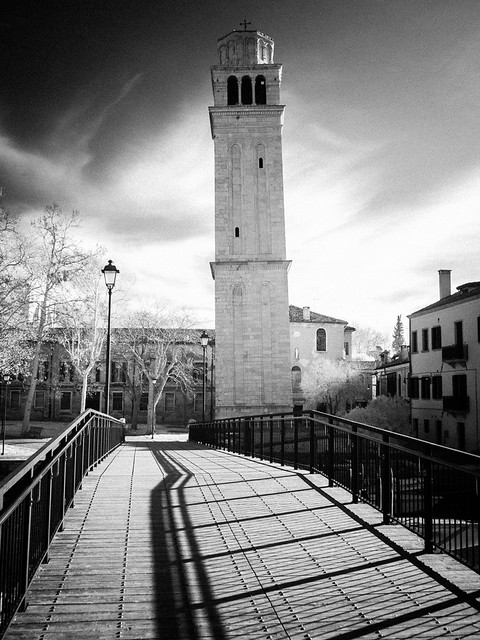
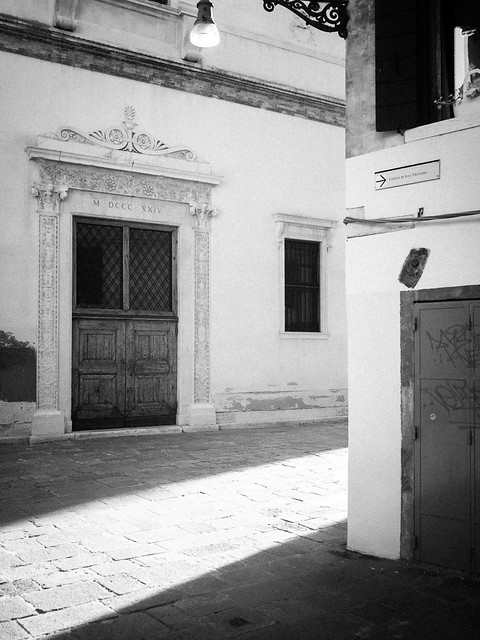
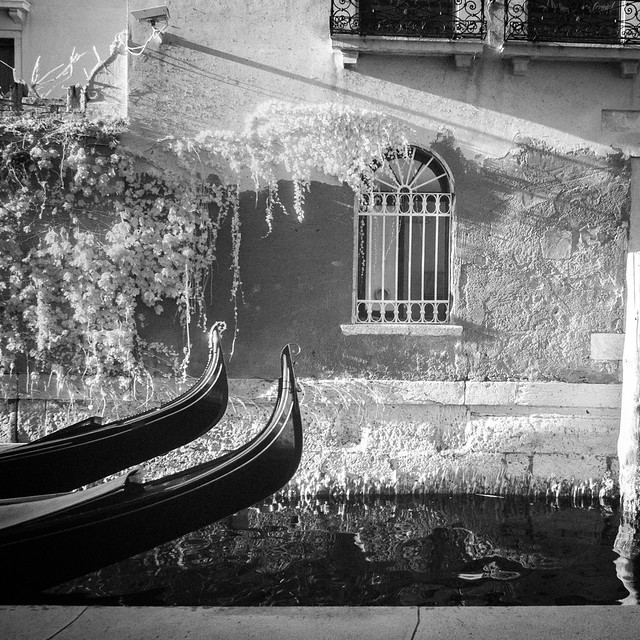
I’ve played around with infrared for years, both on film, using Kodak monochrome and false colour, and on digital, using either a blocking filter on a normal camera, or more recently my Olympus E-P3 converted with an 830nm filter. Up until recently I’ve been quite unmoved by the converted camera, as the out-of-camera look is missing the appeal of film infrared. The key characteristics of Kodak EIR were high grain and strong contrast, as well as a strong glow around highlights achieved at a critical - and hard to master - exposure level. Actually getting a good exposure on EIR was very hit & miss. Of course with a converted digital camera it’s all far too easy - with Live View you can even compose in infrared. But still, the exposure can be a bit tricky, as the camera electronics are designed to deal with visible light JPEGs, and histograms and all that stuff can be a bit misleading. Also, some lenses are very prone to heavy flare in infrared, while being perfectly well behaved in visible light. I also get the impression that there is flare at sensor level too - apparently that is a thing.

Then, after you’ve got the shot, converting the purple/red tinged monochrome image to something that looks like IR as we expect it is also not that trivial. Actually Lightroom has got quite a good preset which can help to get pointed in the right direction, but it’s not enough. I’ve started experimenting with Silver EFX Pro to see if I can get a look I’m happy with. If that works out, maybe I’ll come up with some idea that actually benefits from infrared. But no graveyards - that’s been done.





 This image is a photo taken with Kodak High Speed Infra Red film, using a Hasselblad Xpan. The standard characteristics of IR photography can be seen - the bright vegetation, the other-world effect, and in the case of film, the very coarse grain. Note that this photo was taken handheld, probably at around 1/60th second at f8 or thereabouts. The same photo with the E-1 would take somewhat longer.
A number of different IR filters are available on the market. Some allow a small amount of visible light through, giving a deep, dark red effect. But "real" IR filters are blocking filters, so called because they let no visible light through at all. They appear black to the human eye. I tried two IR filters on the E-1, a B&W 093, and a Hoya R72. The B&W was too dark, but the Hoya works well provided long exposures are used. It goes without saying that IR photography with the E-1 requires a tripod, for two reasons - one the long exposure, and two, you have to frame the shot first with the filter off. Some digicams, such as the Nikon Coolpix 950 (still highly regarded by the IR community), allow you to preview the image on the screen.
After a bit of trial and error, I discovered that on a reasonably sunny day - and you need sunlight for IR photography - using the Hoya filter requires exposures of between 45 and 60 seconds, at apertures between f4.5 and f11. I also quickly discovered that at such exposures the E-1's sensor shows a lot of thermal noise. Fortunately, switching on Noise Reduction fixes this, although at the cost of doubling the exposure time, which really taxes the battery.
This image is a photo taken with Kodak High Speed Infra Red film, using a Hasselblad Xpan. The standard characteristics of IR photography can be seen - the bright vegetation, the other-world effect, and in the case of film, the very coarse grain. Note that this photo was taken handheld, probably at around 1/60th second at f8 or thereabouts. The same photo with the E-1 would take somewhat longer.
A number of different IR filters are available on the market. Some allow a small amount of visible light through, giving a deep, dark red effect. But "real" IR filters are blocking filters, so called because they let no visible light through at all. They appear black to the human eye. I tried two IR filters on the E-1, a B&W 093, and a Hoya R72. The B&W was too dark, but the Hoya works well provided long exposures are used. It goes without saying that IR photography with the E-1 requires a tripod, for two reasons - one the long exposure, and two, you have to frame the shot first with the filter off. Some digicams, such as the Nikon Coolpix 950 (still highly regarded by the IR community), allow you to preview the image on the screen.
After a bit of trial and error, I discovered that on a reasonably sunny day - and you need sunlight for IR photography - using the Hoya filter requires exposures of between 45 and 60 seconds, at apertures between f4.5 and f11. I also quickly discovered that at such exposures the E-1's sensor shows a lot of thermal noise. Fortunately, switching on Noise Reduction fixes this, although at the cost of doubling the exposure time, which really taxes the battery.
 The two images above are 100% detail from a scene shot without noise reduction (left) and with (right).
The image you get, after all this, is very red. Since the effect we're after here is to duplicate black & white IR film (colour IR film is another story altogether), we need to convert this to black and white. First of although you need to convert it from RAW (I don't recommend shooting JPG here). Don't use C1 for IR shots - obviously its well document difficulties with reds have a field day here. Use Photoshop ACR or Viewer/Studio, and ideally just go at default settings. If you use Photoshop ACR, you might see that the red channel is way overblown. Don't worry, but pull it back a bit using Exposure. Next, converting to black & white: Photoshop has several tools for converting to black and white, the most obvious being Desaturate. Don't use this. Use the Channel Mixer, preferably as an adjustment layer. The actual values you dial in to the Channel Mixer are a matter of taste, but generally most useful information is in the Red and Green channels - Blue is pretty noisy and dark.
The two images above are 100% detail from a scene shot without noise reduction (left) and with (right).
The image you get, after all this, is very red. Since the effect we're after here is to duplicate black & white IR film (colour IR film is another story altogether), we need to convert this to black and white. First of although you need to convert it from RAW (I don't recommend shooting JPG here). Don't use C1 for IR shots - obviously its well document difficulties with reds have a field day here. Use Photoshop ACR or Viewer/Studio, and ideally just go at default settings. If you use Photoshop ACR, you might see that the red channel is way overblown. Don't worry, but pull it back a bit using Exposure. Next, converting to black & white: Photoshop has several tools for converting to black and white, the most obvious being Desaturate. Don't use this. Use the Channel Mixer, preferably as an adjustment layer. The actual values you dial in to the Channel Mixer are a matter of taste, but generally most useful information is in the Red and Green channels - Blue is pretty noisy and dark.
 The image below was taken with the E-1 is bright afternoon sunlight, with an exposure of 60 seconds at f/11. In this case arguably it was slightly over-exposed. It was processed using the Channel Mixer settings shown here.
 So, in conclusion, IR photography with the E-1 works and is good fun. Long exposure times mean that you will need a still day, or will accept (or welcome) wind motion blur effects. It is different to film IR, but well worth exploring it its own right.